Beyond the Prototype: Delivering Reliable LLM Applications
Most LLM demos impress. Few survive the chaos of production. Here’s how we build systems that deliver accuracy, control, and business value at scale.
From Demo to Deployment: Building Reliable LLM Applications in Production
Large Language Models have captured the imagination of techies, businesses, and the general public alike. Their potential to automate tasks, understand complex context, and generate creative content is unparalleled. Yet, as more organizations move from shiny demos to real-world deployments, a harsh truth emerges: Shipping a reliable LLM application is fundamentally different from launching a cool prototype — defying its purpose. At the forefront of this transformation, Monta AI empowers organizations to elevate their business with AI, delivering reliable and continually improving solutions, particularly in high-stakes environments.
There’s a massive gulf between a cherry-picked LLM demo and a reliable deployment in production. Imagine testing a rally car on urban roads and expecting optimal performance on unpaved terrain in a race. Similarly, AI applications need to be developed and tested with real-world settings in mind. Their non-deterministic nature makes controlling what customers experience a significant challenge. LLM applications exacerbate that quandary as customers use natural language to interact with applications in astonishingly unanticipated ways. Imagine buyers of a rally car using it to cross rivers and expecting it to be amphibious!

The Demo vs. Production Gap
Key Differences Between Demos and Production
| Aspect | Demo Environment | Production Reality |
|---|---|---|
| User Behavior | Follows happy path scenarios | Unpredictable, creative, edge cases |
| Control | Carefully curated inputs | Natural language chaos |
| Testing | Cherry-picked examples | Real-world data messiness |
| Expectations | Showcase capabilities | Accuracy, reliability, compliance |
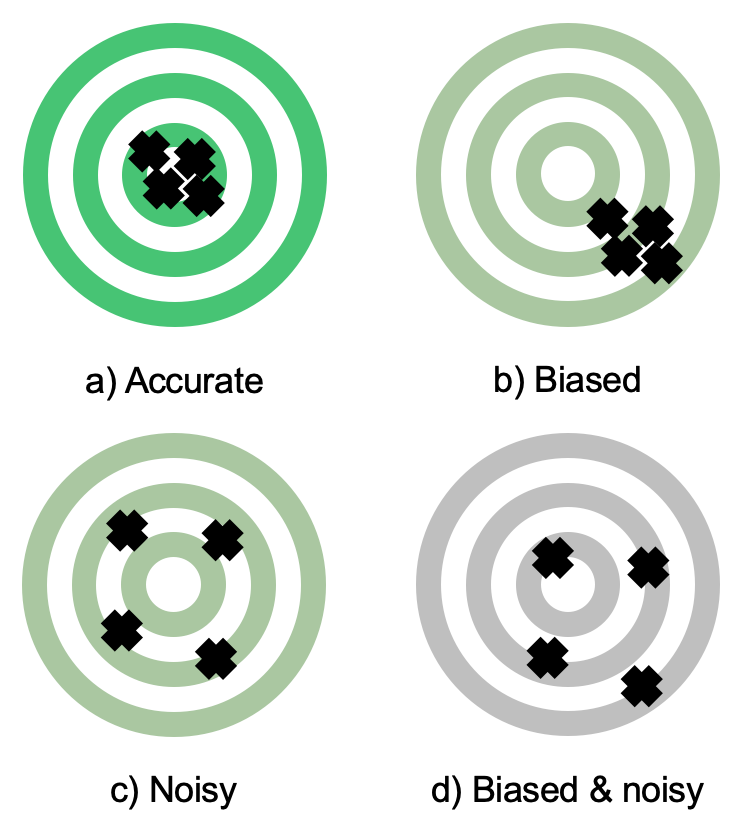
Demos give a false sense of control. They work as designed. They walk potential buyers through a happy path. AI applications in the real, rugged world suffer tremendously from chaos. AI models — by design — are nondeterministic. They model mappings between inputs and outputs in a far more compressed fashion (compared to rote learning or storing explicit mappings in a queryable format). The lack of control in AI applications stems from putting a nondeterministic solution in the hands of customers, who expect it to perform accurately, free from bias and noise. The harsh reality is that bias and noise are inevitable; we merely seek to minimize their effects. We strive to control as much as possible in applications that run amok once outside demo sandboxes.
The Monta AI Approach: Aligning AI with Business Objectives
To start, Monta AI works closely with businesses to define what targets their AI applications shall seek. AI objectives must align with business objectives to add value. These typically include optimizations for metrics such as profit, quality of service, and customer trust.
The Streetlight Effect Problem
| Common Approach (❌) | Monta AI Approach (✅) |
|---|---|
| Rely on community benchmarks | Use real-world business examples |
| Cherry-pick canned examples | Build custom evaluation datasets |
| Optimize for leaderboard rankings | Optimize for business value metrics |
| Look where it’s easiest | Search where answers actually are |
Too often, many software vendors lose sight of such alignment between AI applications and business objectives. Many rely on community benchmarks and leaderboards to make critical decisions such as which LLM to use. In a demo, reusing canned examples from such benchmarks is commonplace. In a real-world application, the benchmark better be real-world examples; otherwise, evaluation suffers from the streetlight effect: looking for answers where it’s easiest to look instead of where they probably are.
💡 Our Promise
At Monta AI, we bring along floodlights to find business value — no matter how elusive. We transform business objectives and constraints into technical reality, applying proven best practices in high-stakes environments, as demonstrated by successful deployments for public and private sector clients. Our approach ensures that AI applications deliver measurable business value with maximal control, not just clever outputs in demos.
Our Approach to Production Reliability
Part of our approach to increase reliability is deep analysis and understanding of business needs and critical challenges your application will face in production. Here are the key pillars:
1. Quality, Latency, and Cost Tradeoffs
Challenge: What combination is optimal for your application?
| Factor | Consideration | Impact |
|---|---|---|
| Quality | Model accuracy and output reliability | User satisfaction, trust |
| Latency | Response time and throughput | User experience, scalability |
| Cost | Infrastructure and API expenses | Business viability, ROI |
Our Approach: We start from first principles to build up a set of satisficing and optimizing desiderata tailored to your specific business constraints.
2. Data Messiness and Drift
Challenge: We expect data to be lacking, noisy, ambiguous, and ever-changing.
Data Quality Issues in Production
| Issue Type | Description | Our Solution |
|---|---|---|
| Missing Data | Incomplete inputs, sparse features | Robust handling, intelligent defaults |
| Noise | Errors, inconsistencies, outliers | Data cleaning pipelines, validation |
| Ambiguity | Unclear intent, multiple interpretations | Context-aware processing, clarification flows |
| Drift | Changing patterns over time | Continuous monitoring, adaptive retraining |
Our Approach: AI applications degrade in production fairly quickly as data drift from anticipated use cases and distributions into the unknown. We treat data as a first-class citizen:
- ✅ Collecting representative datasets
- ✅ Systematic annotation workflows
- ✅ Iterative dataset improvement
- ✅ Experiment tracking and A/B testing
- ✅ Turning user feedback into training signals
Key Insight: Every user interaction and feedback signal is a chance to get smarter.
3. Observability and Incident Response
Challenge: Production systems need proactive monitoring and rapid troubleshooting.
Observability Framework
| Component | Purpose | Tools & Techniques |
|---|---|---|
| Usage Analytics | Track patterns and trends | Statistical analysis, dashboards |
| Anomaly Detection | Identify outliers and issues | Real-time monitoring, alerts |
| Performance Metrics | Measure quality and latency | Custom KPIs, SLAs |
| Root Cause Analysis | Diagnose failures quickly | Logging, tracing, debugging tools |
Our Solutions:
- 📊 Live dashboards with custom metrics
- 🔔 Proactive alerts and custom triggers
- 🔍 Detailed logging for troubleshooting
- ⚡ Rapid rollback capabilities
- 📈 Trend analysis and forecasting
Design Philosophy: We design fault-tolerant solutions that are easy to troubleshoot when needed. When something goes wrong, our solutions provide root-cause analyses and rapid rollback options.
4. Fallback Systems
Challenge: No LLM is perfect. Systems need graceful degradation.
Multi-Layer Fallback Strategy
| Fallback Layer | When Activated | Response Type |
|---|---|---|
| Primary LLM | Normal operation | AI-generated response |
| Human Review | High-stakes or uncertain cases | Expert validation |
| Rules-Based System | Model confidence below threshold | Deterministic logic |
| Rapid DataOps | Known data issues | Surgical fixes, patches |
Our Approach: When possible, we design for human overrides as short-term solutions that are easy and quick to deploy to patch issues. Our solutions enable:
- 🔄 Dynamic fallback to human review
- 📋 Classic rules-based systems for edge cases
- 🚀 Rapid DataOps: fixing problematic data or content surgically
- ⏱️ No waiting for model retraining for critical fixes
5. Security, Privacy, and Compliance
Challenge: High-stakes domains demand regulatory compliance and robust security.
Compliance Framework
| Regulation | Region | Our Implementation |
|---|---|---|
| GDPR | European Union | Data protection, right to deletion, consent management |
| CCPA | California, USA | Consumer privacy rights, data disclosure |
| PDPL | Saudi Arabia | Personal data protection standards |
| NDMO | Saudi Arabia | National data management framework |
Security Layers:
| Layer | Implementation | Purpose |
|---|---|---|
| Guardrails | Content filtering, safety checks | Prevent unsafe/biased outputs |
| Access Control | IAM, role-based permissions | Secure authentication and authorization |
| Data Protection | Encryption, anonymization | Privacy and confidentiality |
| Audit Trails | Comprehensive logging | Compliance and accountability |
Our Expertise: Our team has extensive experience in compliance with regulations such as the EU’s GDPR, California Consumer Privacy Act, and Saudi Arabia’s Personal Data Protection Law and the National Data Management Office framework. Security, privacy, and compliance are baked into every layer of your application — in depth.
Beyond the Basics
Important Note
The list above is by no means comprehensive. It’s merely a glimpse into what it takes to build reliable LLM applications in production. It takes deep integration and alignment of engineering, data, modeling, and business efforts.
The Rising Stakes
| Domain | Reliability Requirements |
|---|---|
| Government | Auditability, transparency, compliance |
| Healthcare | Patient safety, HIPAA compliance, accuracy |
| Finance | Regulatory compliance, fraud prevention, trust |
| Enterprise | Data security, SLAs, business continuity |
As LLMs enter high-stakes domains — such as government, healthcare, and finance — the need for reliability, auditability, and control keeps rising. In the next series of posts, we will walk through how Monta AI deployed LLM systems for high-stakes use cases with further details and insights into real-world compliance, resilience, and scale.
See Our Work in Action
In the meantime, if you’d like to see examples of what we’re delivering for customers today:
Featured Solutions
| Solution | Description | Learn More |
|---|---|---|
| Enterprise Assistant | Production-ready, Arabic-first AI assistant built for enterprise compliance and scale | Explore → |
| Speech AI | Advanced voice and speech understanding for contact centers, meeting intelligence, and more | Check it out → |